miércoles, 15 de febrero de 2017

Valentine's Day


Image result for valentines day       The rise of Internet popularity at the turn of the millennium is creating new traditions. Millions of people use, every year, digital means of creating and sending Valentine's Day greeting messages such as e-cards, love cupons or printable greeting cards. An estimated 15 million e-valentines were sent in 2010.

       Is an annual holiday celebrated on February 14. It is named like that bcause of the saint  Valentinus who married couples of christian soldiers that was forbidden in that time, he was persecuted and during his imprisonment healed the daughter of his jailer and before his execution, he wrote her a letter signed "Your Valentine" as a farewell.


        In 18th-century England, it evolved into an occasion in which lovers expressed their love for each other by presenting flowers, offering confectionary and sending greeting cards.
Related image
        Valentine's Day symbols that are used today include the heart-shape outline, doves, and the figure of the winged Cupid.


       Here in Mexico people celebrate Valentine's Day giving present, cards, goint to restaurants, hotels, to the movies and the theater.


sábado, 11 de febrero de 2017

Factors affecting teachers use of information and communication technology

Image result for ict in education
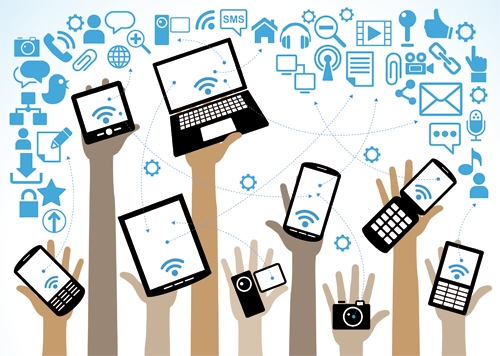
The use of ICT tools in a classroom, makes things easy and can solve problems that appear in the class. It can be useful not only for teachers but also for the students.

         In the last twenty years, investigations had been made in order to see how much of the population has access to computers, like the research by Albrini in 2006 or the one by Bauer and Kenton in 2005 to study about technology integration in schools.
Image result for ICT in the classroom
             The main problem appears to be that teachers does not want to use ICT, yet not for lack of interest but for a lack of technical support like NCATE reported in 1997, study that showed teachers did not used them because they did not know how or where to get help  when somenting went wrong.


            Teacher's training programs often focu more on basic literacy skills ans less on the integrated use of ICT. It is time to complement with effective training programs and motivate teachers to upgrade and update their skills, abilities and knowledge.
Related image

             In  1996 Kirby Mckenzie developed a model for integrating technology into teachers training programs, it consist into three stages:

  • Planning
  • Implementation phase
  • Evaluation
This plan also identified what should be taught, how and which technology.

              Fortunately, nowadays there are more teachers and students using ICT and let's just hope they take advantage of them.


Information and communications technology


The are 4 C's of ICT:
  • Computing
  • Connectivity
  • Content
  • Capacity

      The ICT involve a lot of fields we can think about and it has some goals for the future. For example in education, ICT can increase the quality of educational materials and better trained teachers; in a more social aspect, it can help eradicate extreme poverty and hunger and promote gender equality with programs to educate the population. It can help reduce child mortality, improve maternal health by increasing access to reproductive health information and combat diseases.

Image result for ICT
   There are certain objectives society should reach related to ICT like connect villages, universities, libraries, health centers, adapt primary and secondary schools, ensure population have access and encourage development of content. Unfortunately there are some challenges that this technologies face:


  • Awareness
  • Availability
  • Accessibility
  • Afford-ability

Related image
       "Digital divides are not just the result of economic differences in access to technologies but also in cultural capacity and political will to apply these technologies for development impact". It is a problem the lack of resources in some countries to apply these technologies in schools or other places, but it does not mean that those who can afford it are using them in a right way or in all its potential.


          We need to transform complex technologies into user-friendly systems that is why the Internet of the future must be: trustworthy, reliable, globally inclusive, easy to use, affordable, able to change rapidly, innovative and capable of significant expansion transparently and well managed.


martes, 7 de febrero de 2017

Electronic Age (1946-1957)


Resultado de imagen para first transistor computer

Characterized by electronic devices and advent of solid state devices. It is divided into three periods:

    Resultado de imagen para jack kilby integrated circuit
  • Transistors period: in 1947 the first full transistor computer foundation of every electronic device is lightweight and faster.
  • Integrated circuits period: it revolutionized the use of computers and electronic devices faster operating speed by Jack Kilby.
  • Computers processor period: fast-paced development and innovation in personal computing productivity entertainment communication world wide web by Pier Giorgo and Don Estridge.

Questions:
In what year was the transistor invented? In the year of 1947
Imagen relacionadaWhich was the first "complete turing" computer? Who created it? Mark 1was the first created by IBM.
Which are the main events of the electronic era?  The transistor, integrated circuits and the computer processor.
In what era we are now? Microelectronic era

Imagen relacionada Electromechanical Age (1840-1940)

This era starts when man discovers a way in which the information can be converted to electrical impulses and how to control and use the electricity.

     The first electronic calculating device was the Colossus machine  used by the british and and germans.

Imagen relacionada       Then we have the beginnings of telecommunications like:
Alessandro Volta invented the voltaic pile, the first source of stores electricity in the 8th century.
The telegraph made by Samuel F. J. Morse in 1832.
The radiotelegraph created by Marchese Guglielmo Marconi
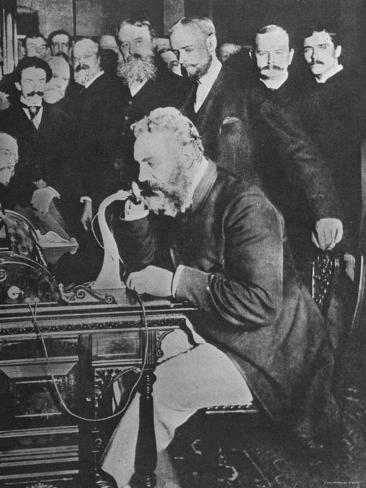
The telephone and radio, on 1876 the first successful bi-directional transmission of clear speech took place.
Resultado de imagen para mark 1 computadora
And finally between the years of 1939-1944 the United States financed the first "complete turing" computer called Mark 1.

Mechanical Age (1450-1840)


Related image
In this period a lot of inventions came out, even that these are not capable of do multiple tasks as the ones we use today. Here are some of those inventions:

Gutenberg made the movable metal-type printing process
Jhon Napier invented the slide rule
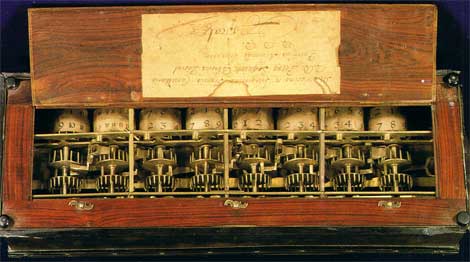
Blase pascal invented a mechanical calculation machine called the pascaline and a german mathematician the stepped reckoner.
A man called Charles Babbage created the designed of the  first modern computer.


jueves, 2 de febrero de 2017

History of information technology


 Image result for technology

Information technology has become a part of our daily life, so is important to know the process it required in order to this technology become what it is today.

Image result for phoenicians alphabet

Pre mechanical Age (3000B.C-1450A.D)

   The man started communicate and managed information through petroglyphs, pictographs and ideographs. Then the sumerians invented the cuneiform script. 
Finally the phoenicians developed a writing system that used symbols to represent sounds.
After man developed writing it started to form libraries and books.
He also create the first numeric systems and the first information processor is the abacus created by the chinese.